The switching fabric is a network topology used in routers to physically transfer the packet from an input link to the appropriate output link.
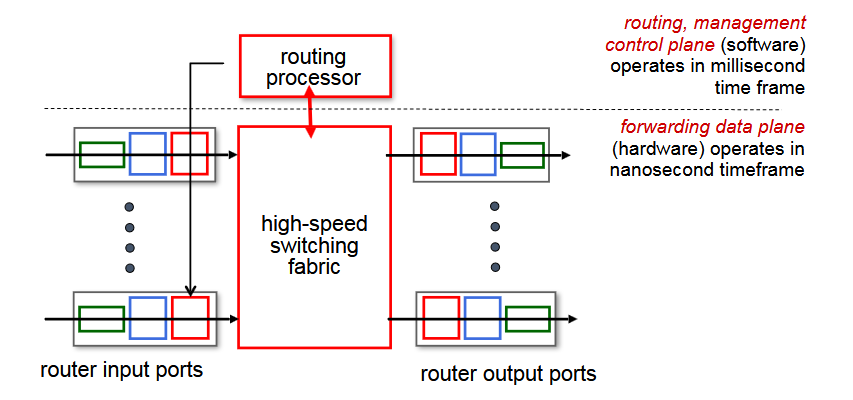 The switching rate is an important characteristic. It is defined as the rate at which packets can be transferred from inputs to outputs. It is often measured as a function of the input/output line rate and number of inputs : .
Types
There are three major types of switching fabrics:
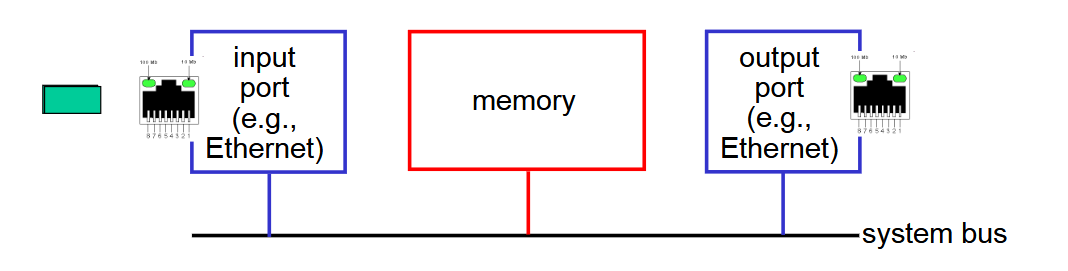
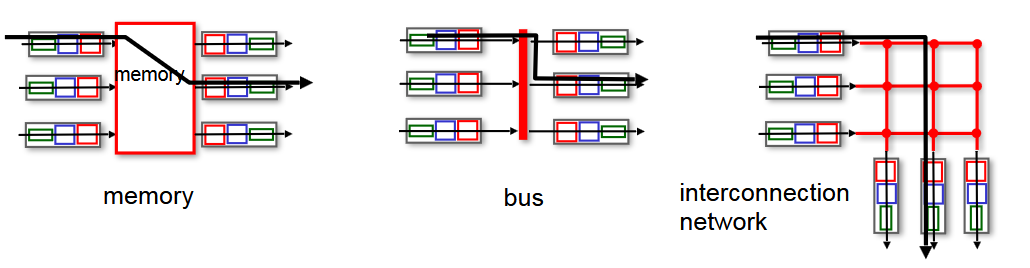 Switching via memory used traditional CPUs to copy input packets to system memory and write it into the output port’s buffer. This speed was limited by memory bandwidth. Note also that there are two bus crossings per datagram in this scheme.
 Switching via a bus moves the datagram directly from the input port memory to output port memory via a shared bus. This switching speed is limited by the bus bandwidth, because of bus contention.
Interconnection networks
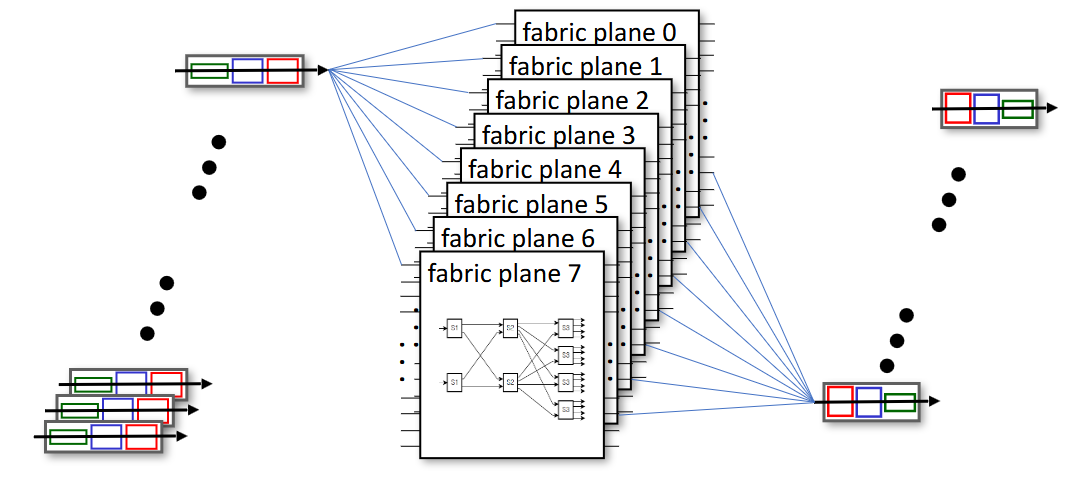
Interconnection networks originally used crossbar switches (originally used to connect processors in a multicore processor). A multistage switch is an switch with multiple stages of smaller switches. It exploits parallel paths from input to output by dividing a single datagram into smaller fixed length cells and switch the cells through the fabric on parallel paths. It is then reassembled at the output port.
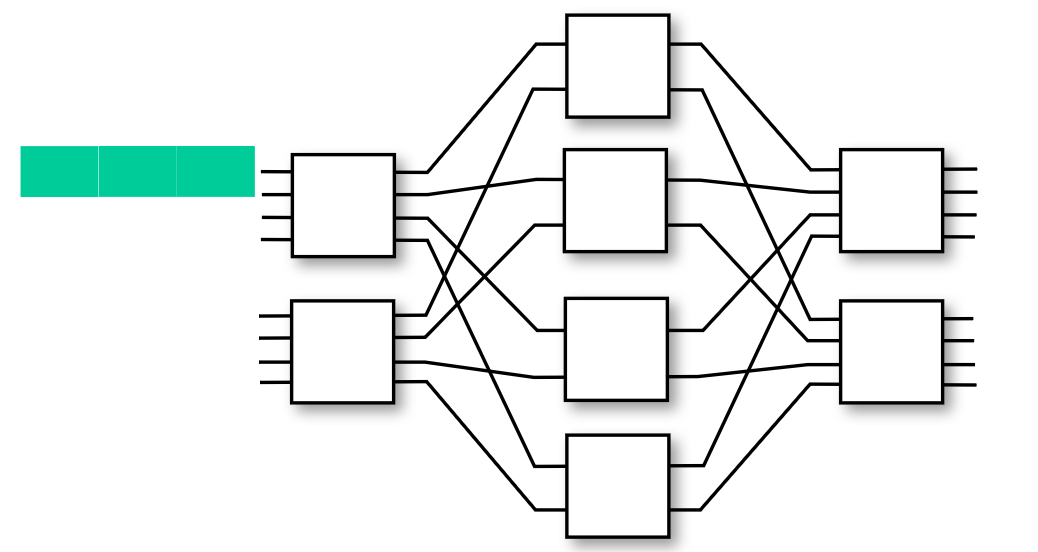 This can be scaled up even further. If we take the above as a single plane, then we can have multiple interconnection fabric planes. For example, the Cisco CRS router has 8 switching planes, each of which have a 3-stage interconnection network. This vastly improves the switching capacity.
See also
- Ethernet switch, which function in the link layer to store and forward Ethernet frames